

Door Handing 101: How to Determine Left-Hand vs. Right-Hand Door Levers
Choosing the perfect door lever is one of the most satisfying details of a home renovation. However, unlike traditional round door knobs that operate identically from either side, door levers often require you to specify "door handing" (Left-Hand vs. Right-Hand)—especially if the lever design is asymmetrical or keyed.
Ordering the wrong handing can result in levers pointing upside down or facing the wrong direction. In this quick, foolproof guide, we’ll show you the exact 3-step method to determine your door’s handing in under 30 seconds.
Why Does Door Handing Matter for Levers?
While many standard passage latches are reversible, certain premium solid brass levers feature:
- Ergonomic Curves or Asymmetrical Designs: Curved or wave-shaped handles that must curve downward/upward comfortably for the palm.
- Keyed Entry & Privacy Functions: Keyholes or privacy locking pins located specifically on one side.
- Integrated Long Plates: Decorative plates designed for specific door swing directions.
Knowing your door handing ensures your new FLIRABBIT hardware installs smoothly and operates flawlessly.
The 30-Second Rule: How to Determine Your Door Handing
Follow this simple method used by professional locksmiths and interior designers:
Step 1: Stand on the Outside of the Door

- For entry/exterior doors, stand outside your house.
- For bedroom/bathroom doors, stand in the hallway facing the closed door.
- For closet doors, stand outside looking into the closet.
Step 2: Locate the Door Hinges

Look at where the hinges are located relative to you while facing the closed door:
- Are the hinges on your LEFT?
- Or are the hinges on your RIGHT?
Step 3: Check Which Way the Door Swings

- Left-Hand (LH): If the hinges are on the LEFT side and the door pushes AWAY from you into the room.
- Right-Hand (RH): If the hinges are on the RIGHT side and the door pushes AWAY from you into the room.
- Left-Hand Reverse (LHR): If the hinges are on the LEFT side and the door pulls TOWARD you.
- Right-Hand Reverse (RHR): If the hinges are on the RIGHT side and the door pulls TOWARD you.
How FLIRABBIT Simplifies Door Handing for You
Worried about making a mistake with door handing? We’ve got you covered.


At FLIRABBIT, our interior passage and privacy door hardware features a Rotatable Latch mechanism. This universal design allows the latch tongue to be easily rotated 180 degrees during installation to match both Left-Hand and Right-Hand swing doors seamlessly.
Whether your door opens inward, outward, to the left, or to the right, a simple flip of the latch ensures smooth operation without needing custom hardware for each door.
Quick Summary Reference Chart
| Hinge Position (Facing Door) | Door Opening Direction | Handing Required |
|---|---|---|
| Left Side | Pushes Away (Inward) | Left-Hand (LH) |
| Right Side | Pushes Away (Inward) | Right-Hand (RH) |
| Left Side | Pulls Toward You (Outward) | Left-Hand Reverse (LHR) |
| Right Side | Pulls Toward You (Outward) | Right-Hand Reverse (RHR) |
Installation Guide & Pro Tips for FLIRABBIT Privacy Locks
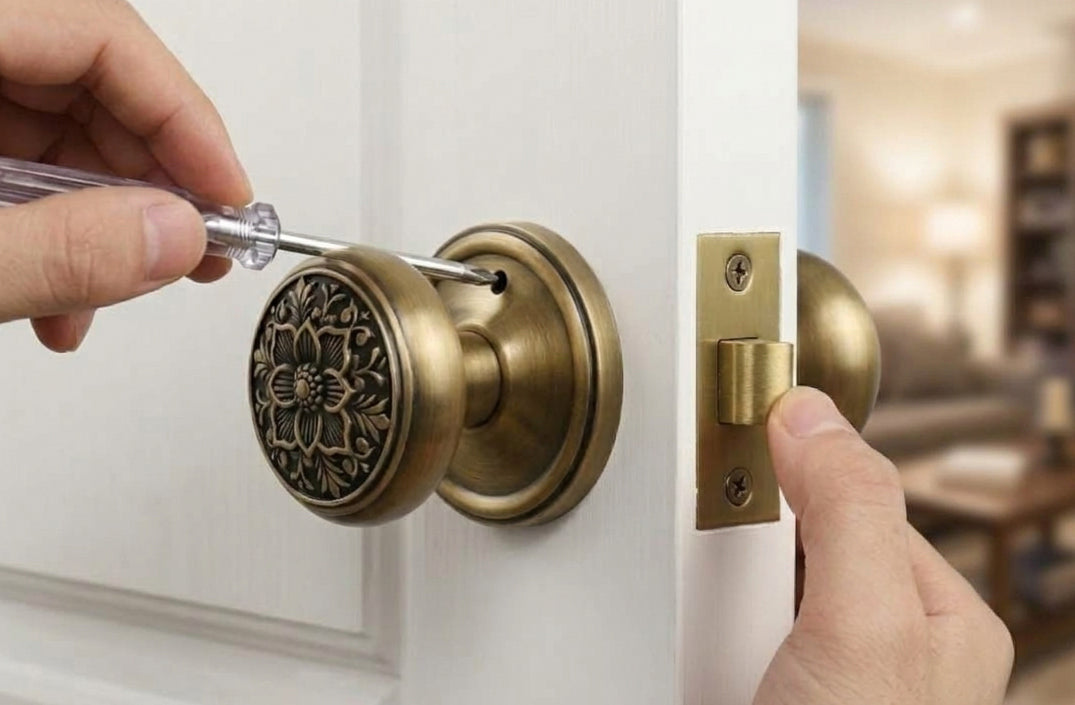
Our privacy levers utilize an elegant, discreet Locking Pin mechanism—eliminating bulky keyholes for a sleek, contemporary aesthetic while maintaining full security for bedrooms and bathrooms.


To ensure flawless operation, keep these essential installation tips in mind:
- Orient and Rotate the Latch Correctly: Before securing the mortise/latch into the door edge, check the door swing direction. Simply pull and rotate the latch bolt 180 degrees so the bevel (sloped face) faces the strike plate on the door frame when the door closes.
-
Confirm Locking Pin Placement (Interior vs. Exterior):
- Privacy Pin Location: The locking pin always installs on the interior side (inside the bedroom or bathroom).
- Emergency Release Hole: Ensure the exterior rosette aligns with the emergency access hole on the outside, allowing emergency unlocking from the outside using a pin, coin, or thin tool.
- Align the Square Spindle & Locking Mechanism: Insert the square spindle through the center of the latch. Ensure the spindle is properly centered so both inside and outside handles sit flush against the door surface. Test the Pin before Final Tightening: Thread the locking pin into place manually on the interior side. Press or turn the pin to test the lock engagement before fully torquing down the rosette mounting screws.
- Avoid Over-Tightening Mounting Screws: Hand-tighten the mounting bolts firmly. Avoid using heavy power drivers with high torque, as over-tightening can bind the latch body or cause the locking pin to feel stiff when pressed/turned.
- Verify Smooth Latch and Pin Movement: Operate the handle up and down several times with the door open. Engage the privacy locking pin to verify that the exterior lever locks securely, then push the interior handle to confirm that rotating the inside handle automatically releases the lock (if applicable) or allows easy disengagement.
Frequently Asked Questions (FAQ)
A: Many of our passage and privacy levers feature fully reversible latches and handles that can be easily configured for both Left-Hand and Right-Hand doors during installation. However, for our specialty long plate and custom forged series, specifying handing helps ensure factory-precise alignment out of the box.
A: For double doors, you will typically need one Left-Hand lever and one Right-Hand lever, or a pair of Dummy levers depending on the door lock setup.
A: No! Thanks to our 180° rotatable latch design, FLIRABBIT privacy and passage levers are universally reversible. You can easily adjust the latch direction during installation to suit both left-hand and right-hand doors.
A: Safety is built in. All FLIRABBIT privacy sets with locking pins include an exterior emergency release feature. You can unlock the door from the outside in seconds using a small pin, paperclip, or coin.
Upgrade Your Interior Doors with FLIRABBIT
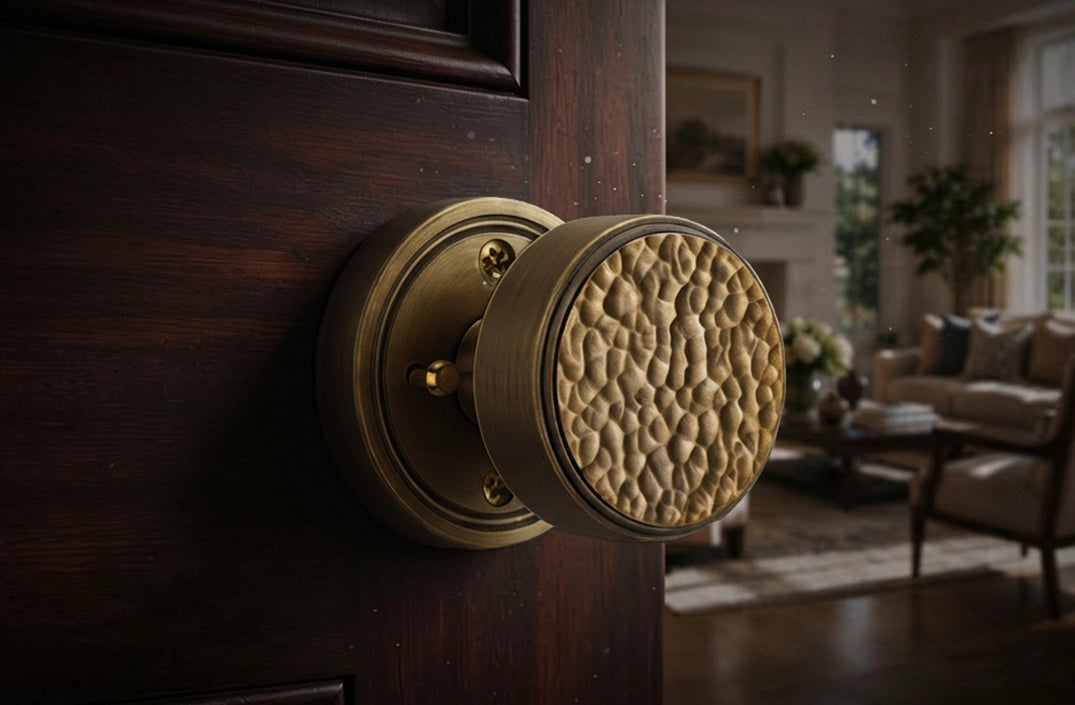
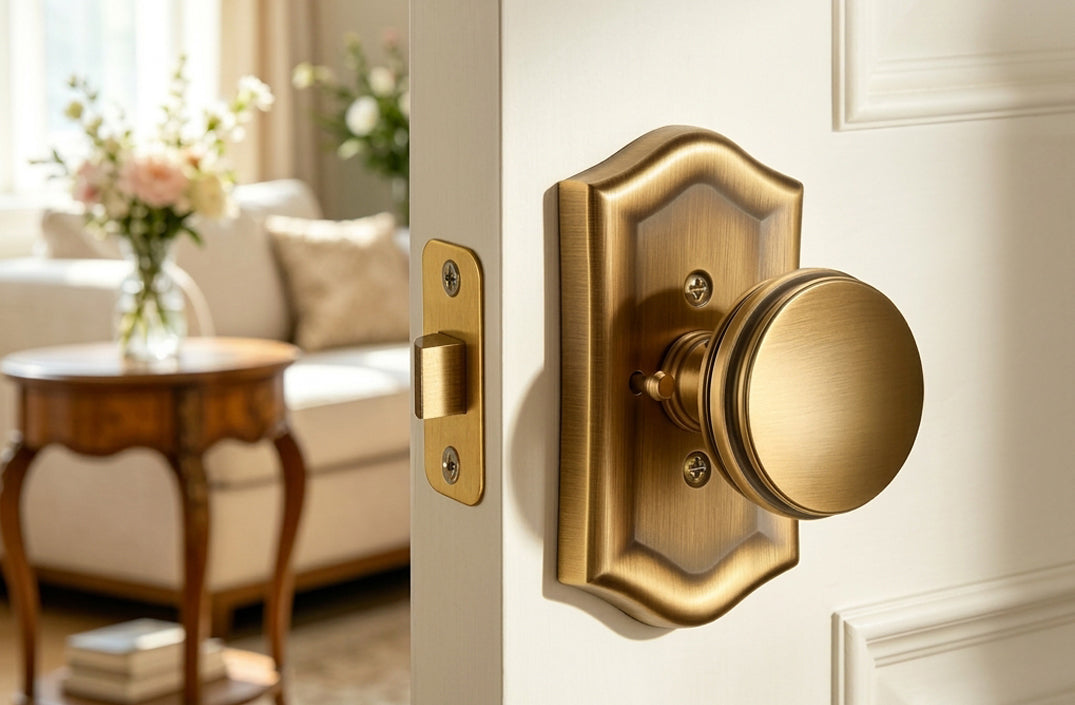
Now that you know your door handing, exploring our solid brass collections is seamless. Whether you choose our Modern Heritage Round Rosette Levers or our Tactile Knurled Series, every piece is crafted to bring timeless elegance and uncompromised quality to your home.
Explore All Solid Brass Door Hardware

Leave a comment
This site is protected by hCaptcha and the hCaptcha Privacy Policy and Terms of Service apply.